Economics & Finance Trends - January 28, 2026
Gold hits $5,200 amid debasement fears, while Trump's tariffs loom.
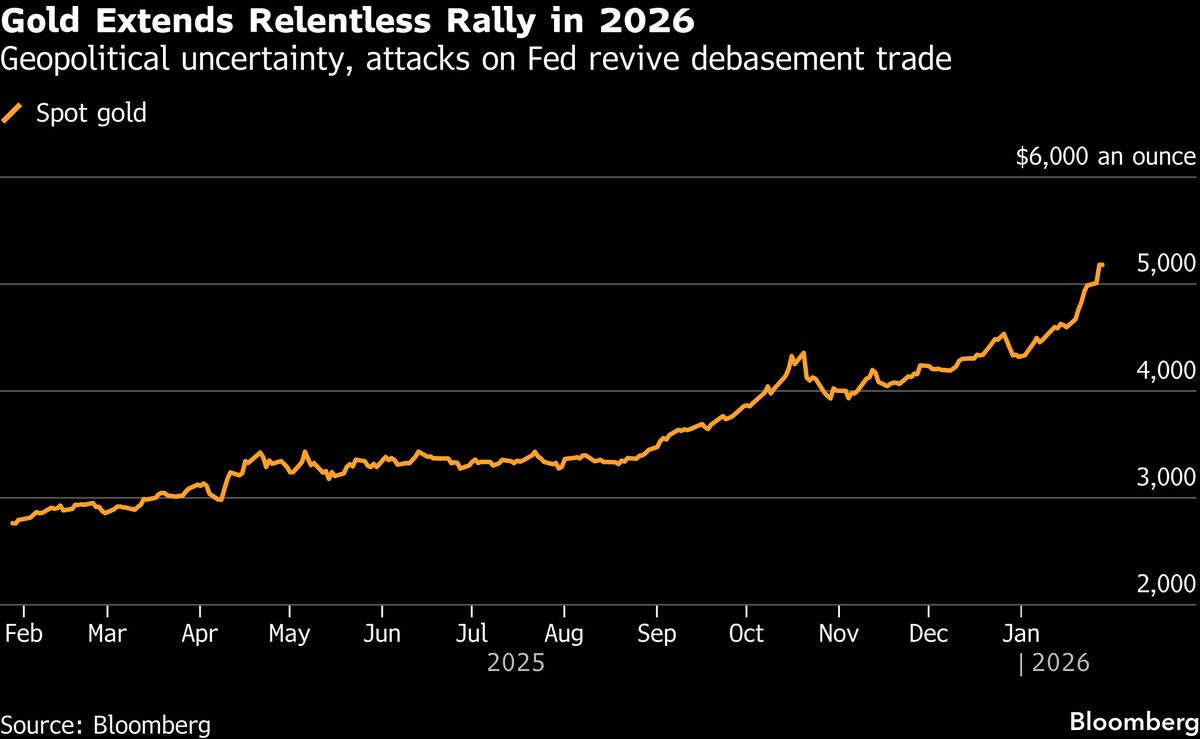
Economic Trend Analysis: Gold Shines Amidst Political Uncertainty, Tariffs Loom Large
Gold prices are shattering records, soaring past $5,200 an ounce, a clear signal that investors are flocking to safe-haven assets as confidence in fiat currencies wavers. This rally isn't just a random market fluctuation; it's fueled by rhetoric suggesting potential currency debasement, a classic driver for gold's appeal. The implications are stark: as traditional currencies face skepticism, gold reasserts its role as a store of value, potentially accelerating a shift in global investment strategies away from dollar-denominated assets.
This surge in gold demand underscores a growing unease about the stability of the global financial system. When a commodity like gold breaks through significant price ceilings, it often reflects deeper anxieties about inflation, geopolitical risks, or the long-term purchasing power of major world currencies. For investors, this presents an opportunity to diversify portfolios, but it also signals a potentially turbulent period ahead for traditional financial markets.
Meanwhile, the specter of trade protectionism continues to cast a long shadow. Reports indicate that Denmark is preparing for potential tariffs from the United States on goods from Greenland. This isn't an isolated incident; it's part of a broader pattern of shifting trade policies that create economic friction and uncertainty. Such tariffs can disrupt supply chains, increase costs for businesses and consumers, and strain international relations.
The ripple effects of these trade disputes extend far beyond the directly affected nations. They can lead to retaliatory measures, impacting industries globally and potentially slowing down economic growth. Businesses relying on international trade must navigate this increasingly complex landscape, factoring in the risk of sudden policy changes and the associated costs. For consumers, this could translate into higher prices and reduced product availability.
In the legal and professional services sector, internal firm dynamics are creating significant uncertainty. The future of a star Kirkland partner hangs in the balance as the firm sides with private equity in a dispute over legal tactics. This highlights the high-stakes nature of modern corporate law and the potential fallout when firms must choose between client interests and internal ethical considerations. Such disputes can damage a firm's reputation, affect client confidence, and lead to significant financial or strategic realignments.
On a more granular, consumer-focused front, the frustration of purchasing defective goods is reaching a boiling point for some. The story of a consumer repeatedly buying faulty mattresses, enduring "mattress hell," underscores a critical issue in consumer protection and product quality. The struggle to obtain refunds or replacements for clearly substandard products points to systemic weaknesses in recourse mechanisms for buyers.
This consumer plight isn't just about a bad mattress; it reflects broader challenges in holding manufacturers and retailers accountable for product quality. It raises questions about warranty effectiveness, return policies, and the legal avenues available to consumers when faced with persistent product failures. The "so what?" here is that such experiences erode consumer trust and can lead to calls for stronger regulatory oversight and more robust consumer rights.
Market Insights: Navigating Volatility and Consumer Woes
The current economic climate, marked by soaring gold prices and looming trade disputes, demands a strategic approach to investment. Gold's record-breaking performance above $5,200 suggests that inflationary fears and geopolitical jitters are the dominant market narratives. Investors seeking to hedge against this uncertainty might consider increasing their allocation to precious metals, but should remain cognizant of gold's inherent volatility.
The potential for US tariffs on Greenlandic products, as reported by The Economist, signals a continued trend of protectionism. This could impact specific sectors involved in the trade of goods between the US and Denmark, and potentially create broader supply chain disruptions. Companies with significant exposure to these trade routes should assess their risk mitigation strategies and explore alternative sourcing or market options.
Furthermore, the consumer issue highlighted by MarketWatch, involving repeated purchases of faulty goods, points to potential weaknesses in corporate quality control and customer service. While individual cases may seem minor, a pattern of such incidents can signal underlying operational problems for companies and may eventually attract regulatory scrutiny. For investors, this is a red flag regarding the operational efficiency and brand reputation of companies involved.
While cryptocurrency markets data is unavailable for this period, the broader economic trends suggest that digital assets, like other risk assets, would likely be influenced by the prevailing sentiment. A flight to safety in gold might correlate with a cautious approach to more speculative investments, though the long-term narrative for cryptocurrencies remains distinct and evolving.
References
- Gold Hits Record Above $5,200 as Trump Dollar Comments Aid Rally - Bloomberg Markets
- Denmark braces for Donald Trump’s Greenland tariffs - The Economist
- Star Kirkland partner’s future in doubt as firm sides with PE in legal tactics dispute - Financial Times
- ‘I have been living in mattress hell’: I bought a dud — twice. How can I get my money back? - MarketWatch
Related Posts
Economics & Finance Trends - April 29, 2026
AI's changing market dominance and investor uncertainty dominate today's financial landscape.
April 29, 2026Economics & Finance Trends - April 28, 2026
Analysis of LNG market shifts and surprising US corporate profit strength.
April 28, 2026Economics & Finance Trends - April 27, 2026
US profits defy global woes, India faces currency pressure, and tech supply chains tighten.
April 27, 2026