Science & Technology News - April 15, 2026
Quantum leaps, AI evolution, and surprising biological shifts dominate this week's science and tech landscape.
Main Heading
Quantum Computing Moves from Theory to Engineering
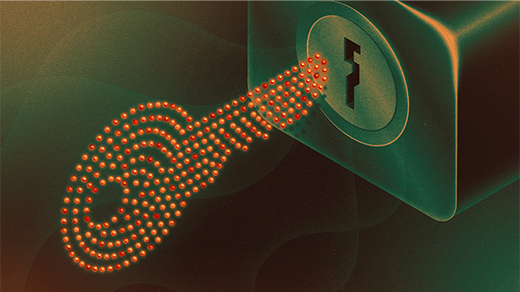
Recent breakthroughs reported by Quanta Magazine signal a significant acceleration in the development of quantum computers. These advances highlight that the challenging engineering hurdles, rather than theoretical impossibilities, now stand between us and functional quantum computation. This progress matters because it promises to unlock computational power far beyond today's supercomputers, potentially revolutionizing fields like drug discovery, materials science, and cryptography. The development of fault-tolerant quantum computers could solve problems currently intractable, rendering current encryption methods obsolete and enabling the design of novel materials with unprecedented properties.
AI Agents: The Peril of Premature Action
The arXiv preprint server reveals a critical debate around the behavior of advanced AI agents in the paper "Parallax: Why AI Agents That Think Must Never Act" (arXiv:2604.12986v1). This research directly confronts the risks associated with autonomous AI agents that possess complex reasoning but are allowed to act impulsively in the real world. This matters because the gap between an agent's internal thought process and its external actions could lead to unintended, potentially catastrophic consequences. The paper advocates for a more deliberate interaction model, urging that AI agents be designed with built-in checks and balances before executing actions, especially in critical systems.
Meanwhile, other AI research from arXiv delves into the practicalities of training these powerful models. "One Token Away from Collapse: The Fragility of Instruction-Tuned Helpfulness" (arXiv:2604.13006v1) highlights a vulnerability in current large language models (LLMs), demonstrating that their helpfulness can be surprisingly brittle and easily disrupted by subtle input changes. This research is crucial because it points to the need for more robust evaluation and fine-tuning strategies when deploying LLMs in sensitive applications. The implications extend to user trust and the reliability of AI-powered services, where unpredictable behavior can quickly erode confidence. Ongoing efforts in instruction tuning and model distillation (as seen in papers like arXiv:2604.13010v1 and arXiv:2604.13016v1) aim to refine LLM capabilities, but this latest finding underscores that significant challenges remain in ensuring their consistent and reliable performance.
Biological Shifts and Environmental Interplay
Beyond the digital realm, intriguing biological developments suggest modern living may be significantly altering human oestrogen levels, as reported by New Scientist. This finding matters because it could have profound implications for reproductive health, metabolic disorders, and certain types of cancer. The subtle, pervasive nature of environmental factors associated with modern lifestyles, from diet to plasticizers in everyday products, is increasingly implicated in endocrine disruption. This research prompts a broader societal reflection on the long-term health consequences of our industrialized environment and its impact on fundamental biological processes.
Complementing this, Science Daily highlights a novel approach to oral hygiene: a new toothpaste that targets gum disease without harming beneficial oral bacteria. This is a significant advancement because it offers a microbiome-friendly therapeutic solution. Traditional treatments often employ broad-spectrum antimicrobials that decimate both harmful and helpful microbes, leading to dysbiosis and secondary issues. The development of targeted therapies that preserve the delicate balance of the oral microbiome is a critical step towards more sustainable and effective healthcare solutions. This approach could pave the way for similar innovations in other areas of medicine where preserving beneficial microbial communities is paramount.
Astronomical Observations and Conservation Efforts
In the vastness of space, new observations of young stars are offering insights into planetary habitability. Phys.org reports that young stars tend to dim quickly in their X-ray output, a finding that may actually benefit orbiting planets. This matters because while high X-ray and UV radiation can strip planetary atmospheres, a rapid decrease in this output in the early stages of a star's life could provide a more stable environment for planets to develop and retain their atmospheres. This discovery refines our understanding of the conditions necessary for life to emerge beyond Earth by highlighting the importance of stellar radiation patterns.
Closer to home, the conservation efforts for the North Atlantic Right Whale present a mixed picture, as detailed by WIRED. A reported baby boom offers a glimmer of hope for this critically endangered species, with an increase in calf sightings. However, the underlying threats—primarily ship strikes and entanglement in fishing gear—remain severe. This demographic rebound, while statistically positive, does not erase the existential risks. It underscores the ongoing, urgent need for stringent protective measures and international cooperation to ensure the long-term survival of these magnificent marine mammals. The success of conservation hinges not just on reproductive rates but on mitigating the human-induced pressures that continue to threaten their existence.
Shifting Academic Landscapes
Finally, a significant shift in academic policy is reported by Nature: China is discontinuing its prominent journal ranking list. This move signals a potential pivot away from a metrics-driven approach to research evaluation that has long dominated global academia. This matters because such ranking systems, while intended to foster competition and quality, have often been criticized for encouraging quantity over quality, leading to hyper-specialization and a focus on high-impact journals at the expense of broader scientific inquiry. China's decision could inspire other nations to re-evaluate their own systems, promoting a more holistic and perhaps more sustainable model for scientific progress and researcher assessment.
References
- New Advances Bring the Era of Quantum Computers Closer Than Ever - Quanta Magazine
- New toothpaste stops gum disease without killing good bacteria - Science Daily
- China discontinues prominent journal ranking list - Nature
- Modern living may be causing big changes to our oestrogen levels - New Scientist
- Young stars dim quickly in their X-ray output, potentially benefiting orbiting planets - Phys.org
- A North Atlantic Right Whale Baby Boom Is On—but the Species Remains at Risk - WIRED Science
- Visual Preference Optimization with Rubric Rewards - arXiv
- Representation geometry shapes task performance in vision-language modeling for CT enterography - arXiv
Related Posts
Science & Technology News - April 13, 2026
AI's dark side, HIV's hidden secrets, and the universe's first light headline today's science and tech.
April 13, 2026Science & Technology News - April 11, 2026
AI advances, climate shifts, and biological discoveries shape science.
April 11, 2026Science & Technology News - April 10, 2026
Quantum leaps, cosmic puzzles, and urban cooling strategies dominate today's science.
April 10, 2026