Science & Technology News - March 25, 2026
AI challenges, robot dexterity, deepfake X-rays, and whale conservation headline March 25, 2026.
AI Tackles Real-World Robotics and Medical Imaging Challenges
Artificial intelligence is pushing boundaries, but the gap between theoretical prowess and practical application remains a significant hurdle. Recent arXiv submissions highlight this tension, particularly in robotics and medical diagnostics. The "MedObvious: Exposing the Medical Moravec's Paradox in VLMs" paper, for instance, directly confronts the long-standing challenge of AI excelling at abstract tasks but faltering with common-sense physical reasoning – the very thing humans do effortlessly. This "Moravec's Paradox" is particularly stark when AI systems, even advanced Vision-Language Models (VLMs), struggle with the nuanced interpretations required in clinical triage. The implication here is clear: while AI can process vast datasets, replicating human intuition and contextual understanding in critical fields like medicine demands more than just raw computational power.
Further underscoring the dexterity issue, a WIRED Science article touches upon the delicate physical interactions required for survival and reproduction in a species facing extinction. While not directly AI research, the parallels to humanoid robots struggling with "the small stuff," as explored by Quanta Magazine, are striking. Grasping a delicate object or navigating cluttered environments requires a sophisticated interplay of vision, touch, and motor control that current AI systems are still refining. Papers like "VTAM: Video-Tactile-Action Models for Complex Physical Interaction Beyond VLAs" signal a move towards integrating more sensory data, pushing beyond purely visual inputs to better equip robots for real-world manipulation.
The implications for AI development are profound. The focus is shifting from simply scaling up models to developing more robust architectures that can handle uncertainty and integrate diverse sensory information. For instance, "VISion On Request: Enhanced VLLM efficiency with sparse, dynamically selected, vision-language interactions" proposes a more efficient way for VLMs to process visual data, suggesting that smarter, not just bigger, models are key. This pursuit of nuanced understanding also extends to software development, with papers like "Code Review Agent Benchmark" and "Evaluating LLM-Based Test Generation Under Software Evolution" examining how AI can improve code quality and reliability. The challenge remains to ensure these AI tools possess the contextual awareness needed to avoid introducing subtle, hard-to-detect errors, much like the deepfake medical X-rays discussed in Nature.
Conservation and Consciousness: Broader Scientific Frontiers
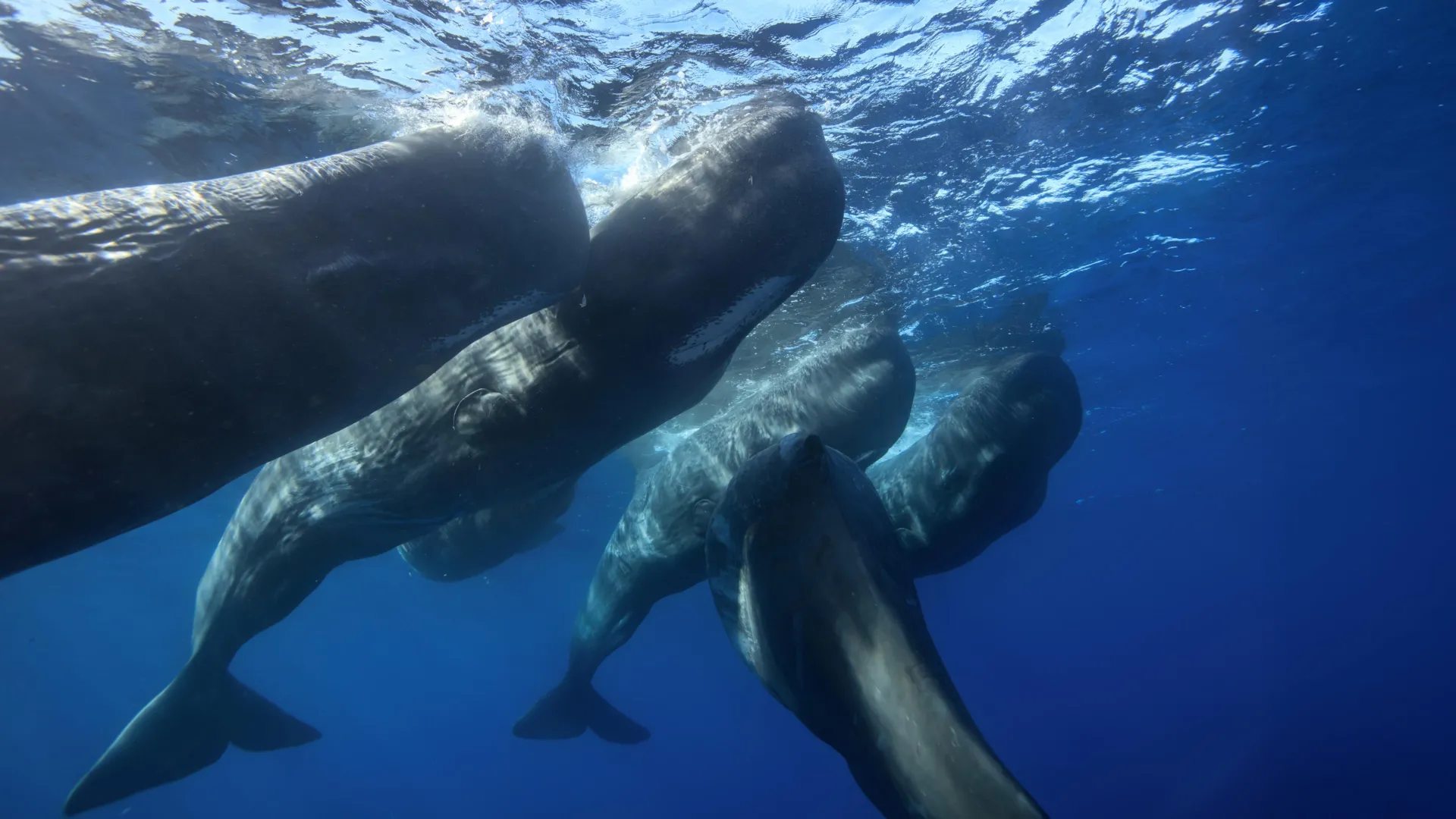
Beyond AI, significant scientific developments are unfolding across disciplines. Conservation efforts for the North Atlantic Right Whale are showing promising signs of a baby boom, yet the species remains critically endangered. WIRED Science reports that while births have increased, threats like ship strikes and entanglement persist, underscoring the complex interplay of ecological factors and human impact. This mirrors the more visceral, yet equally compelling, discovery of sperm whales engaging in headbutting behavior, captured on camera for the first time by Science Daily. Such observations are vital for understanding animal social dynamics and behavior, offering clues to their ecological roles and evolutionary paths.
Meanwhile, the philosophical deep dive into consciousness continues. New Scientist highlights research focusing on fundamental questions that aim to unravel the subjective experience of awareness. This exploration, while abstract, has long-term implications for fields ranging from neuroscience and psychology to artificial intelligence, as understanding consciousness could unlock new paradigms in machine intelligence and human-computer interaction.
Finally, the strategic vision for space exploration is evolving. Phys.org features an expert advocating for a shift from a linear, "frontier" approach to a more cyclical, "feedback loop" model. This suggests a future where space activities are more integrated, sustainable, and iterative, focusing on continuous learning and resource utilization rather than one-off expeditions. The implications point towards a more mature and responsible engagement with the cosmos, potentially paving the way for long-term human presence and scientific endeavors beyond Earth.
Tech Impact and Future Outlook
The rapid advancements in AI, particularly in Vision-Language Models (VLMs) and robotics, signal a pivotal moment. The challenge of bridging the gap between theoretical AI capabilities and real-world application, as highlighted by the "Medical Moravec's Paradox" paper, necessitates a focus on contextual understanding and multi-modal integration. This push towards more robust AI will directly impact industries requiring fine motor skills and nuanced decision-making, from advanced manufacturing and logistics to healthcare diagnostics. The development of more efficient VLM architectures, like those proposed in "VISion On Request," will accelerate AI deployment by reducing computational overhead.
The specter of deepfakes in medical imaging, as reported by Nature, underscores an urgent need for advanced AI-driven verification tools. The ability of these fakes to fool even experienced radiologists is a stark warning about the potential for AI to erode trust in critical data. This necessitates a dual approach: developing AI that can generate realistic outputs while simultaneously creating AI that can rigorously detect synthetic media. This arms race will define the integrity of digital information across many sectors.
Furthermore, the exploration into the fundamental nature of consciousness and the evolving strategies for space exploration may seem distant from immediate technological applications. However, breakthroughs in understanding consciousness could eventually inform the development of truly sentient AI, while the shift towards a circular model in space exploration could unlock new avenues for resource acquisition and off-world industrialization. These long-term research trajectories hold the potential to reshape our understanding of intelligence and humanity's place in the universe.
References
- Sperm whales caught headbutting each other on camera for the first time - Science Daily
- A North Atlantic Right Whale Baby Boom Is On—but the Species Remains at Risk - WIRED Science
- Why Do Humanoid Robots Still Struggle With the Small Stuff? - Quanta Magazine
- These medical X-rays are all deepfakes — and they fool even radiologists - Nature
- The simple questions cracking the hard problem of consciousness - New Scientist
- From frontier to feedback loop: Expert explains why space must become circular - Phys.org
- MedObvious: Exposing the Medical Moravec's Paradox in VLMs via Clinical Triage - arXiv
- VISion On Request: Enhanced VLLM efficiency with sparse, dynamically selected, vision-language interactions - arXiv
Related Posts
Science & Technology News - April 29, 2026
Data centers in space, quantum jamming, and 10,000 new exoplanets headline today's science.
April 29, 2026Science & Technology News - April 28, 2026
AI ethics, LLMs, and unexpected biological findings dominate this week's science and tech.
April 28, 2026Science & Technology News - April 26, 2026
AI threats, ancient immunity, climate mysteries, and more.
April 26, 2026