World News Briefing - March 1, 2026
Argentina's labor law overhaul and US-Israel strikes on Iran signal global instability.
Main Heading: Shifting Sands: Labor Laws and Middle Eastern Flashpoints
Argentina's Labor Law Overhaul: A Gamble for the Digital Age?
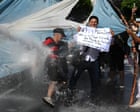
Argentina is barreling towards a sweeping overhaul of its labor laws, a move that promises significant disruption. President Javier Milei's administration is pushing for measures that could fundamentally alter the employment landscape, potentially leading to "more exploitation, fewer rights," as reported by The Guardian. The implications for the tech sector, particularly for the burgeoning gig economy and remote workforces in Argentina, are profound.
This dramatic shift signals a potential pivot towards a more flexible, albeit precarious, labor market. For tech companies operating in or outsourcing to Argentina, this could mean lower operational costs due to reduced employer obligations. However, it also raises serious ethical questions and could spark significant social unrest, impacting stability and the availability of a skilled workforce in the long run. The government's rationale appears to be a bid to attract foreign investment and stimulate economic growth, but the human cost and the potential for increased inequality are stark. This isn't just about traditional employment; it's about defining the future of work in a region increasingly looking towards digital solutions.
Middle East on Edge: Escalation and Unforeseen Consequences
The geopolitical landscape just became significantly more volatile. Reports from Deutsche Welle and Al Jazeera confirm that the US and Israel have launched attacks on Iran, with Lebanon finding itself on edge. This escalation marks a dangerous new phase in regional tensions, with potential ramifications that extend far beyond the immediate conflict zone.
The immediate danger lies in the risk of wider regional conflict. Strikes on a major power like Iran, even if targeted, carry an inherent risk of retaliation, potentially drawing in other regional players and disrupting global supply chains. For the tech industry, this translates to increased uncertainty in critical markets and potential impacts on the flow of goods and data. Sectors reliant on Middle Eastern resources or transit routes could face severe disruptions. Furthermore, such conflicts often lead to increased cyber warfare activity, posing a direct threat to digital infrastructure worldwide. The long-term consequences for international relations, energy markets, and global stability are immense and deeply concerning.
Global Insights: Interconnected Risks and the Future of Work
These two seemingly disparate events – Argentina's labor law reforms and the escalating conflict in the Middle East – are not isolated incidents. They represent a broader trend of increasing global instability and the redefinition of economic and political frameworks.
Argentina's move reflects a global push for labor market flexibility, often driven by the demands of the digital economy and a desire to compete on a global scale. However, as seen in the potential for increased exploitation, this flexibility comes at a cost. The tech industry, which thrives on agile talent acquisition, must grapple with the ethical tightrope of leveraging these changes while ensuring fair labor practices. The conflict in the Middle East, on the other hand, underscores the fragility of global peace and the interconnectedness of geopolitical events. A localized conflict can have cascading effects on global markets, supply chains, and digital security. Tech companies need to build resilience, diversify operations, and stay acutely aware of these geopolitical risks to navigate the turbulent waters ahead.
The interconnectedness of these events highlights a critical juncture: how will nations balance economic competitiveness with social equity, and how will the global community manage escalating geopolitical tensions in an increasingly digital world?
References
Related Posts
World News Briefing - April 24, 2026
Global conflicts fuel defense sector, El Salvador's crackdown, and Scotland's literary allure.
April 24, 2026World News Briefing - April 23, 2026
Iran conflict's trade impact vs. COVID, Mexico tourism hit, and Ukraine peace talks.
April 23, 2026World News Briefing - April 22, 2026
Hungary's rights win, Canada's US economic ties, and US campus legal aid trends.
April 22, 2026