World News Briefing - January 30, 2026
Venezuela's economic gambit, Hungary's political crackdown, and digital free speech battles.
Main Heading: Global Shifts and Digital Echoes - January 30, 2026
Venezuela's Audacious Economic Gamble
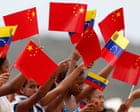
The question of whether Delcy Rodríguez, Venezuela's executive vice president, can engineer a Latin American economic miracle akin to China's Deng Xiaoping is a high-stakes gamble unfolding on the global stage. Rodríguez is reportedly pushing for sweeping market-oriented reforms aimed at rescuing Venezuela from its deep economic quagmire. The implications for the tech sector are profound: if successful, this could unlock a significant, previously inaccessible market, ripe for digital infrastructure investment and consumer tech adoption.
However, the path is fraught with peril. Venezuela's hyperinflation, which has seen its currency plummet by astronomical figures in recent years, remains a formidable obstacle. Furthermore, the political stability required for such reforms is tenuous at best, given the nation's complex geopolitical standing. The success of this ambitious project hinges on navigating entrenched corruption and securing international confidence – a tall order for any developing nation, let alone one emerging from prolonged crisis. For tech companies, this represents a potential goldmine but demands extreme caution and a long-term strategic vision.
Hungary's Crackdown on Progress
Budapest Mayor Gergely Karácsony faces charges related to the Pride parade, signaling a troubling trend of authoritarian creep within Hungary. While the specific legalities of the charges are being debated, the timing and nature of this action raise serious concerns about the erosion of civil liberties and the suppression of LGBTQ+ rights. This isn't just a local political spat; it's a canary in the coal mine for digital communities and free expression.
In an era where online platforms are crucial for organizing and amplifying social movements, such governmental overreach can have chilling effects. Tech companies, particularly social media platforms, must grapple with how to uphold freedom of expression while navigating increasingly restrictive legal landscapes. The clampdown could signal a move towards greater state control over online discourse, impacting everything from content moderation policies to the very accessibility of digital spaces for marginalized groups. The tech industry, often a champion of open communication, finds itself at a crossroads, forced to confront the reality of governments actively seeking to curtail digital freedoms.
The Digital Battleground: Bisan Owda's TikTok Triumph
The swift reinstatement of Palestinian journalist Bisan Owda's TikTok account after a significant outcry highlights the immense power of online mobilization and the precarious nature of digital platforms as arbiters of free speech. Owda's alleged ban, reportedly for content related to the ongoing conflict, sparked immediate backlash from users and advocacy groups worldwide. This event underscores a critical tension: platforms like TikTok, with billions of users, wield enormous influence but often struggle with consistent and equitable content moderation, especially in politically charged environments.
The rapid reversal suggests that platform policies are not static but are responsive to public pressure, a dynamic that tech giants both fear and leverage. For content creators, journalists, and activists operating in conflict zones or under oppressive regimes, regaining access to these global communication channels is not merely a convenience; it's a lifeline. The incident serves as a stark reminder of the digital divide and the ongoing debate about censorship, algorithmic bias, and the responsibility of social media companies in shaping global narratives. The tech industry must continually refine its approach to content governance to ensure fairness and transparency, lest it be perceived as an agent of suppression rather than a facilitator of dialogue.
Global Insights
Venezuela's potential pivot towards market reforms, if it gains traction, could represent a significant geopolitical realignment. A move away from state-controlled economics, even partially, might attract foreign investment and offer a blueprint for other resource-rich nations struggling with similar economic crises. The tech industry, always on the lookout for emerging markets, will be watching closely for any signs of stabilization that could justify investment in digital infrastructure and services.
The situation in Hungary, alongside similar trends in other European nations, points to a growing challenge for tech companies in maintaining open online environments. As governments become more assertive in regulating digital spaces, platforms face the difficult task of balancing user freedom with legal compliance. This could lead to a fragmented internet, where services operate under vastly different rules in different jurisdictions, complicating global operations and user experience.
The Bisan Owda case is a microcosm of the larger struggle for digital sovereignty and free expression. It demonstrates that while platforms have immense power, they are not immune to user agency. The ability of a global online community to effect change underscores the need for transparent and accountable content moderation policies. For tech companies, navigating these complex socio-political landscapes requires a nuanced understanding of local contexts and a commitment to upholding fundamental rights, even when it's difficult.
References
- Can Venezuela’s Delcy Rodríguez become a Latin American Deng Xiaoping? - The Guardian
- Budapest mayor charged over Pride parade - Deutsche Welle
- Palestinian journalist Bisan Owda regains TikTok account after outcry - Al Jazeera
Related Posts
World News Briefing - April 29, 2026
Global security and infrastructure concerns dominate today's headlines.
April 29, 2026World News Briefing - April 28, 2026
AI ethics, geopolitical tensions, and electoral battles dominate global headlines.
April 28, 2026World News Briefing - April 27, 2026
Analysis of UK's Falklands stance, Colombia-Venezuela talks, and Iran's US power limits.
April 27, 2026