Science & Technology News - January 20, 2026
Silver sparks battery breakthroughs, AI tackles mental health, and carbon removal faces setbacks.
Main Heading
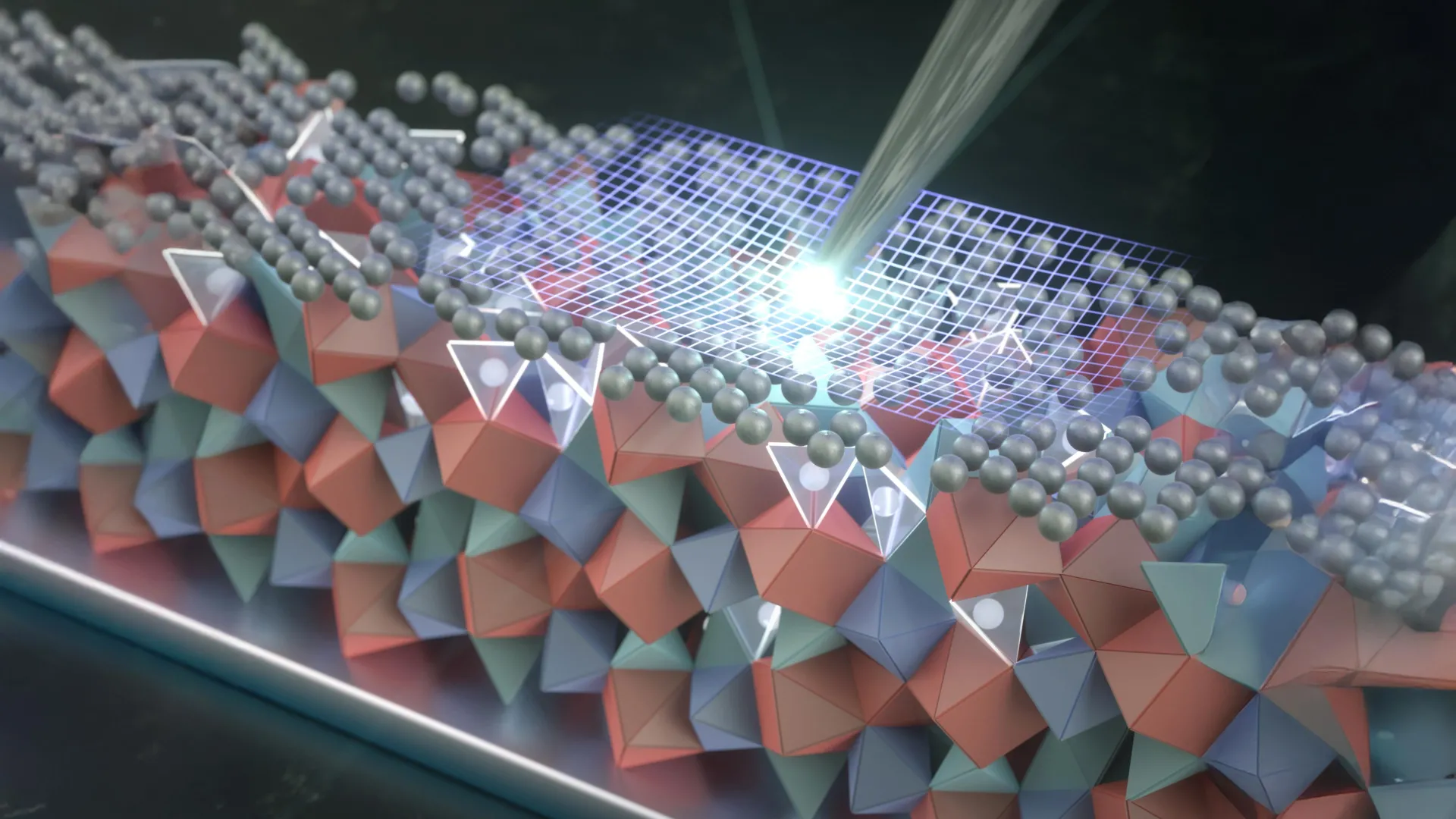
Silver Shines in Solid-State Battery Revolution
Forget the incremental improvements; silver is now directly addressing a fundamental roadblock in solid-state batteries. A recent breakthrough, detailed by Science Daily, reveals how silver has been engineered to overcome dendrite formation, the persistent nemesis of these next-generation energy storage devices. This isn't just about making batteries last longer; it's about unlocking their full potential for faster charging, higher energy density, and enhanced safety – critical factors for everything from electric vehicles to grid-scale storage.
Dendrites, essentially tiny metallic spikes, grow through the solid electrolyte during charging and discharging cycles. They can short-circuit the battery, leading to failure and, in worst-case scenarios, fires. Traditional solutions have involved thicker electrolytes or complex interface engineering, often sacrificing performance. By integrating silver in a novel way, researchers appear to have created a self-healing mechanism or a pathway that prevents these damaging structures from forming. The implication is a significant leap towards commercially viable solid-state batteries, potentially accelerating the transition away from lithium-ion technology.
AI's Expanding Role: From Mental Health Diagnosis to Digital Afterlives
Artificial intelligence is no longer just a tool for analysis; it's poised to become a diagnostic partner and a digital resurrecter, as highlighted by New Scientist and Phys.org. The potential for AI to revolutionize mental illness diagnosis is immense. By analyzing subtle patterns in speech, facial expressions, and even text-based communication, AI algorithms could offer more objective, consistent, and early detection of conditions like depression, anxiety, and schizophrenia. This could democratize access to mental healthcare, especially in underserved regions, and provide clinicians with powerful predictive insights.
However, AI's foray into the realm of the 'digital afterlife' raises profound ethical questions. Phys.org reports on AI's ability to create 'artificially alive' representations of deceased individuals. While this might offer comfort to some, it blurs the lines between memory and reality, potentially impacting grief processes and our understanding of consciousness itself. The convergence of AI in these two distinct yet deeply human domains underscores its transformative, and at times unsettling, power.
HPV Vaccine's Unexpected Ripple Effect and Carbon Capture's Stumble
Science continues to surprise, with the HPV vaccine demonstrating an unexpected benefit beyond its primary target. Nature reports that this vaccine, primarily developed to prevent human papillomavirus infection and subsequent cervical cancer, might also offer protection against other cancers. This phenomenon, known as heterologous immunity, suggests that the immune response triggered by the HPV vaccine could prime the body to better fight off related pathogens or even unrelated cancers. It's a powerful reminder of the complex interplay within our immune systems and the potential for broad-spectrum benefits from targeted interventions.
On a more sobering note, the ambitious promises of carbon removal technology are facing harsh reality checks. WIRED Science details how a seemingly promising venture in this critical field failed to materialize. The complexities of scaling such technologies, coupled with the economic realities and potential unforeseen environmental impacts, mean that even the most innovative ideas can falter. This serves as a crucial cautionary tale: while the urgency of climate change demands bold solutions, the path from concept to impactful deployment is fraught with challenges that require rigorous scientific validation and sustainable business models.
AI's Internal Logic: A Universal Encoding of Reality?
Intriguing research explored by Quanta Magazine suggests that distinct AI models, despite being trained on different data and architectures, may be converging on similar internal representations of reality. This implies that there might be a fundamental, underlying structure to how complex systems, both artificial and natural, learn to model the world. If AI models independently discover similar ways to encode information about physics, causality, or object permanence, it could offer profound insights into the nature of intelligence itself and the fundamental principles governing our universe.
This convergence could lead to more robust and generalizable AI systems. Instead of building bespoke models for every task, we might be able to leverage these shared 'encoding principles' for more efficient and powerful AI development. It hints at a universal language of information processing that AI is beginning to decipher, with implications for fields ranging from neuroscience to fundamental physics.
References
- Silver just solved a major solid-state battery problem - Science Daily
- HPV vaccine could help to protect the unvaccinated against cervical cancer - Nature
- AI is promising to revolutionise how we diagnose mental illness - New Scientist
- Artificially alive: How AI is bringing the dead back and what that means for the living - Phys.org
- Distinct AI Models Seem To Converge On How They Encode Reality - Quanta Magazine
- How the Next Big Thing in Carbon Removal Sank Without a Trace - WIRED Science
Related Posts
Science & Technology News - April 29, 2026
Data centers in space, quantum jamming, and 10,000 new exoplanets headline today's science.
April 29, 2026Science & Technology News - April 28, 2026
AI ethics, LLMs, and unexpected biological findings dominate this week's science and tech.
April 28, 2026Science & Technology News - April 26, 2026
AI threats, ancient immunity, climate mysteries, and more.
April 26, 2026